

Earlier this week in our Playbook Kickoff, I spotlighted a headline that got us talking: “AI overtakes salary and burnout as top influence on India’s workforce.”
Today, let’s unpack what’s really happening behind this seismic shift—why it matters now, and what it means for where we work, learn, and lead next.
Artificial Intelligence Overtakes Pay and Burnout as Top Influence on India’s Workforce
India’s professional landscape is undergoing a seismic shift. According to the latest Indeed 2025 Workplace Trends Report, AI has emerged as the strongest force shaping how Indian workers approach their jobs, careers, and daily routines — eclipsing traditional motivators such as salary and burnout.
Mapping the Scenario
The report surveyed nearly 4,000 participants across 14 industries and found that an astonishing 71% of Indian employees now turn to AI for idea validation, problem solving, or planning career moves — treating AI much like a trusted colleague. For many, generative AI has evolved from a support tool to a workplace collaborator.
Rohan Sylvester, Talent Strategy Advisor at Indeed India, commented:
“India’s workplace is changing in practical ways — how people learn, how they schedule work, and how they manage careers. Organisations that provide clear learning paths, flexible options, and career support will be better placed to retain talent.”
Trendlines: New Norms and Behaviors
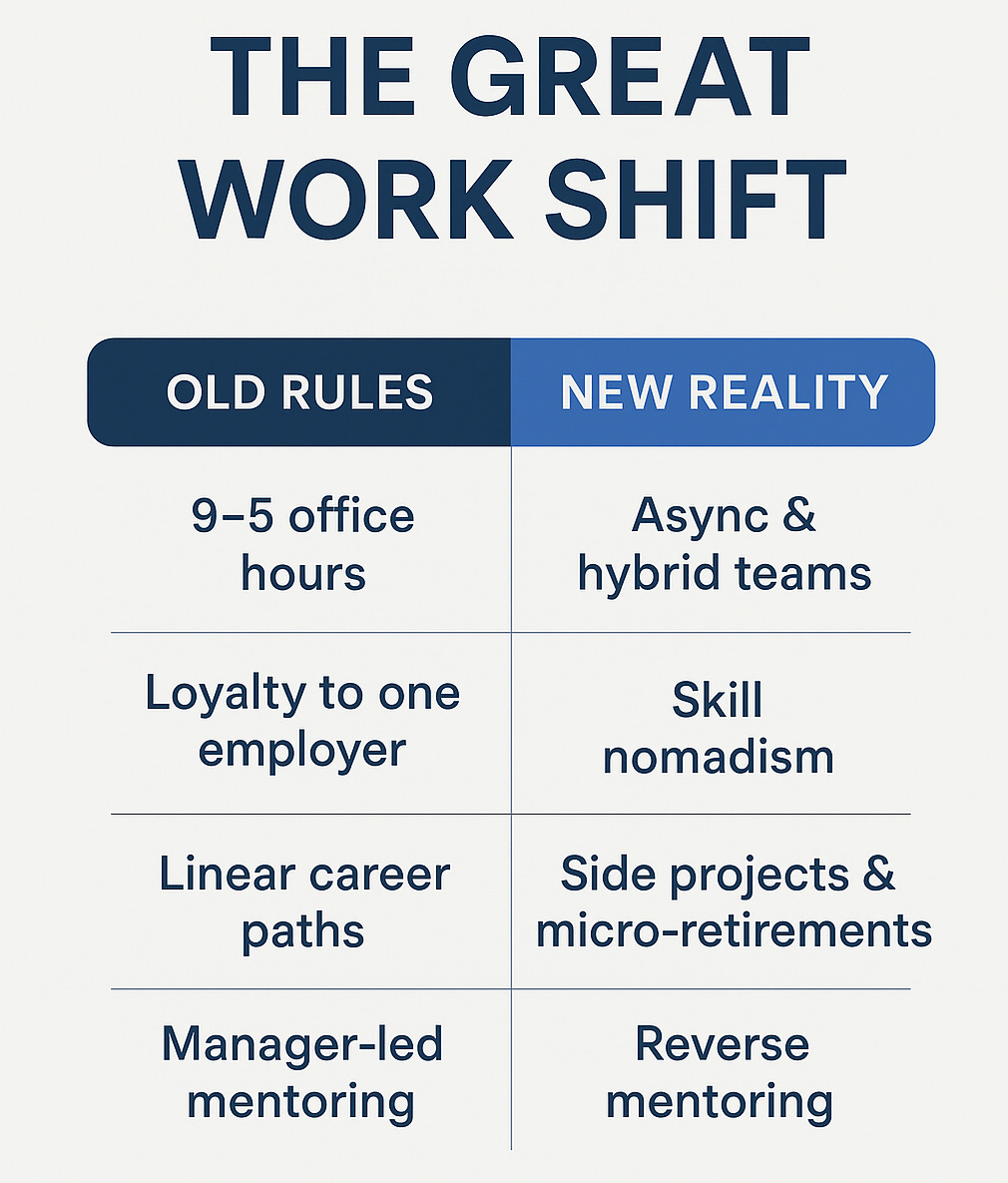
Skill Nomadism & Micro-Retirements
Flexibility rules the new workplace. Employees are embracing “skill nomadism” — moving between roles, continually updating skills, and adapting to change. Micro-retirements, or short intentional breaks to rest, retrain, or pursue side projects, are becoming mainstream, reflecting a deeper push toward well-being and sustained employability.
Modern Work Behaviors
The rise of “bare-minimum Mondays,” moonlighting, and discreet AI-assisted work (“AI moonshining”) are clear signs of experimentation. Reverse mentoring and fluid teams add to a culture that values agility over traditional loyalty.
A Generational Shift
Gen Z leads this change, with 68% of entry/junior employees actively testing new strategies for learning and career growth. Overall, three out of four Indian employees now engage in at least one modern work behavior, signaling that adaptability is becoming the new norm.
The Disconnect: Employers vs. Employees
While employees describe actions such as job-hopping, coffee badging, or quiet quitting as strategic adaptations, many employers still see these behaviors as disengagement or lack of commitment.
42% of employers equate non-traditional routines to disengagement.
62% of employees consider them smart survival strategies.
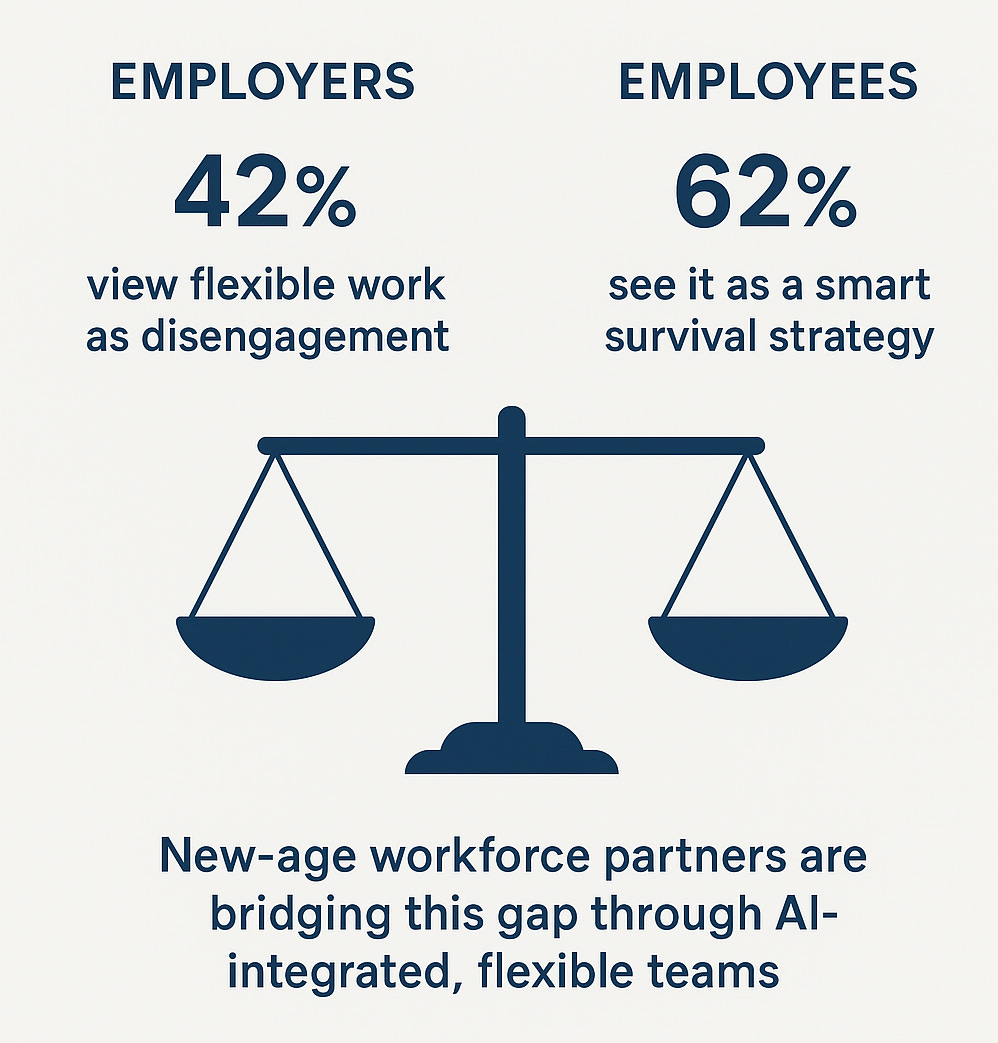
This widening gap underscores a need for organisations to rethink engagement and retention — shifting from policing to enabling flexible experimentation.
➡️ As this gap widens, a new class of partners and platforms is emerging to bridge it — offering flexible, AI-integrated teams and data-driven workforce models that help companies stay agile without adding overhead.
Root Causes: Why Now?
The arrival of generative AI in 2022 sparked much of this change. Today, flexibility and autonomy (43%) outweigh even financial concerns, followed by ongoing stress, burnout (37%), and job-security worries (30%). Personal drivers, such as redundancy risk or family demands, also feature strongly.
Attrition has ticked up for one in five companies by over 20% in the past year, with emergent work patterns cited as a partial cause. Still, companies are increasingly normalising micro-retirements and AI-driven routines, reflecting a pragmatic response to new realities.
Impact: Productivity, Retention, and Culture
AI adoption isn’t about rebellion; it’s about resilience.
Sashi Kumar, Head of Sales at Indeed India, observes:
“People are adopting experimental practices — from skill shifts to flexible routines. Recognising and supporting these behaviours is key for organisations to stay relevant, retain talent, and build stronger workplaces.”
While emerging trends like moonlighting, career cushioning, and quiet quitting pose challenges to productivity, they also signal new opportunities for smarter talent management.