
🚀 Playbook Kickoff: June 8, 2026
AI Governance, Infrastructure & Workforce Transformation: This Week's Frontlines

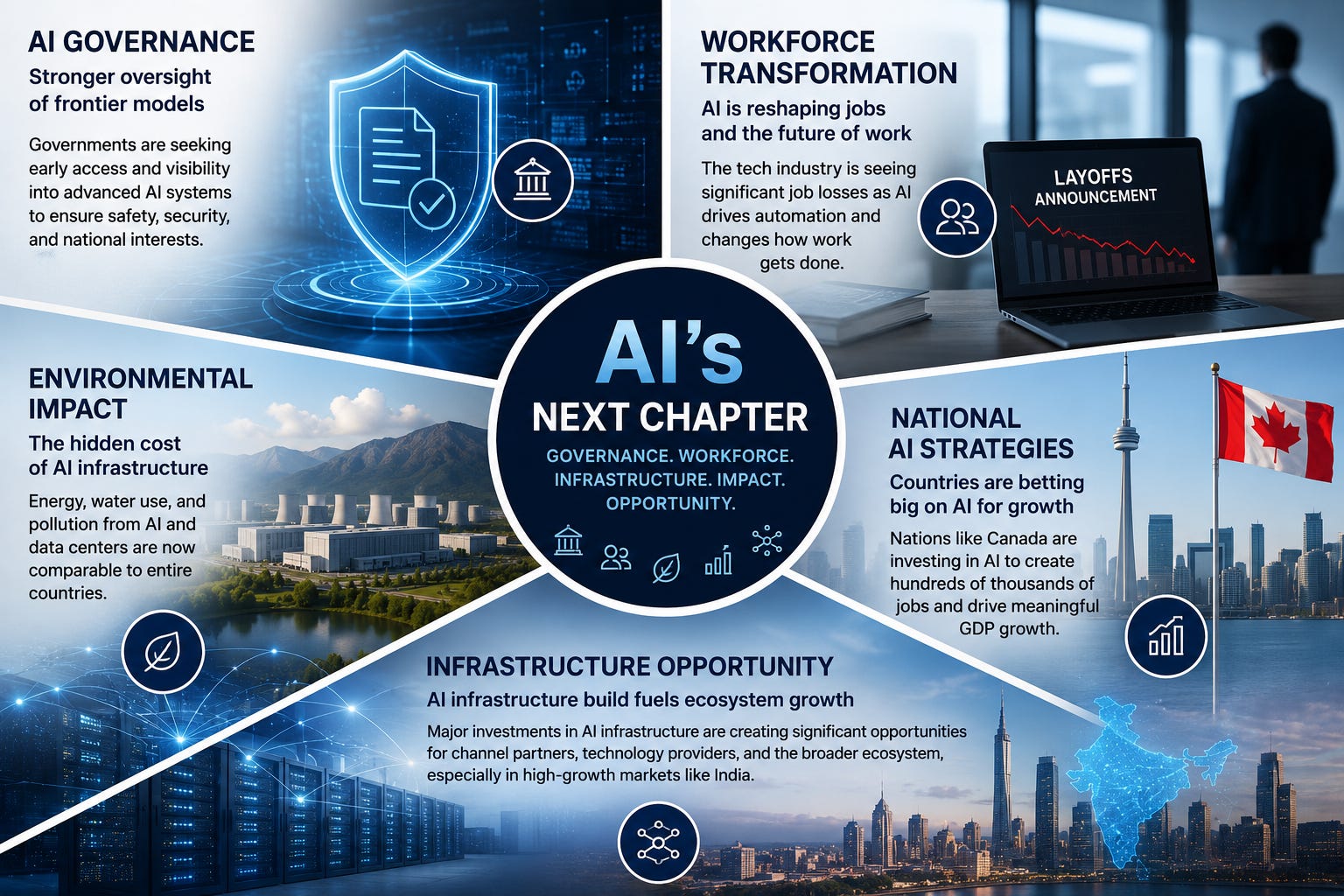
Welcome to this week's Playbook Kickoff, your curated look at the trends shaping AI adoption, business transformation, and the future of professional services. This week's headlines highlight a growing reality that AI is no longer just a technology story. Governments are stepping deeper into oversight, nations are competing to build AI infrastructure, and organizations are navigating both the opportunities and disruptions created by rapid AI adoption.
🏛️ Trump Signs Executive Order for Early AI Model Reviews
The Signal
President Trump has signed an executive order designed to give the US government early access to advanced AI models before their public release. The initiative aims to strengthen oversight of frontier systems through voluntary reviews focused on safety, security, and national interests.
Why It Matters
AI governance is moving closer to the development cycle itself. Rather than regulating after deployment, governments are seeking visibility before powerful models reach the market. This signals a future where frontier AI development may increasingly operate alongside government review processes.
👥 Tech Industry Loses 123,000 Jobs as AI Reshapes Work
The Signal
The technology sector has lost approximately 123,000 jobs this year, with AI frequently cited as a contributing factor. Companies continue to automate workflows, streamline operations, and restructure teams as they adapt to new productivity models.
Why It Matters
The workforce impact of AI is becoming more visible. While new opportunities continue to emerge, organizations are simultaneously redesigning existing roles around automation. The challenge for businesses is not simply adopting AI, but managing workforce transitions effectively.
🌍 AI Infrastructure Faces Growing Environmental Scrutiny
The Signal
New analysis suggests that the energy consumption, water usage, and pollution associated with AI systems and data centers now rival those of many countries. As AI adoption accelerates, concerns around sustainability are becoming increasingly difficult to ignore.
Why It Matters
The future of AI will not be determined by capability alone. Resource efficiency is emerging as a strategic consideration for governments, enterprises, and investors. Organizations that can scale AI while minimizing environmental impact may gain both economic and regulatory advantages.
📈 Canada Bets on AI for Economic Growth
The Signal
Canada has unveiled an AI strategy that aims to create 250,000 jobs and increase national GDP by 3 percent. The initiative focuses on accelerating adoption, supporting innovation, and strengthening the country’s position in the global AI economy.
Why It Matters
Governments are increasingly treating AI as national economic infrastructure rather than a standalone technology sector. The countries that successfully combine talent development, infrastructure investment, and business adoption may capture outsized economic gains over the coming decade.
🏗️ India’s AI Infrastructure Build Creates New Opportunities
The Signal
India’s expanding investment in AI infrastructure is opening new opportunities for channel partners, technology providers, and ecosystem players. Growth in data centers, cloud services, and AI deployment capabilities is creating fresh demand across the technology value chain.
Why It Matters
AI adoption is creating opportunities far beyond model developers. Infrastructure providers, implementation partners, and technology services firms are becoming critical enablers of the AI economy. For many organizations, the biggest opportunity may lie in supporting AI adoption rather than building the models themselves.
The Playbook Closing Thought
This week’s developments point to a broader shift in how AI is being viewed around the world.
What began as a race to build more capable models is rapidly evolving into a race to govern, deploy, power, and scale AI responsibly. Governments are expanding oversight, nations are investing in infrastructure, and businesses are adapting to profound workforce changes.
The next chapter of AI will be shaped not only by technological breakthroughs, but by the institutions, infrastructure, and talent ecosystems that determine how those breakthroughs are translated into economic value.